 Back

Why You Should Take Your Period Itch Seriously
FACT: Periods can already be uncomfortable enough. An itchy intimate area can make them feel even more frustrating.

What Is Vaginal Itching?
Period itch medically known as “vaginal pruritus” is a symptom that affects the external genital area during menstruation. Hormonal changes can make the skin more sensitive, while prolonged contact with pads or tampons may cause irritation. In some cases, itching is a sign of a vaginal infection or a skin condition that requires medical treatment.
The good news is that period itch is often temporary and manageable once you understand what's causing it. While it's usually nothing to worry about, paying attention to your symptoms can help you tell the difference between mild irritation and a sign that it's time to see your OB-GYN.
Read on to learn more about period itch.
Is Vaginal Itching During Your Period Normal?
"I've been feeling itchy down there. Is this normal?"
Yes. While it can be uncomfortable, it's often caused by hormonal changes that temporarily disrupt the vagina's natural balance of good and bad bacteria, leading to vaginal itching.
Along with itching, you may also experience:
- A burning sensation
- Changes in vaginal discharge
- General discomfort in the intimate area
Does the Timing of Your Itch Matter?
The timing of the itching can also provide clues about its cause. If the itch occurs at different stages of your menstrual cycle, it may be linked to different underlying factors.
| Before your period | Hormonal changes may temporarily affect your vaginal pH balance, which can lead to itching. |
| During the first few days of your period | A drop in estrogen levels and changes during the follicular phase may create an environment where yeast can thrive. While this doesn't automatically mean a yeast infection is present, it's something to watch out for. |
| Toward the end of your period | Lingering menstrual blood may contribute to continued irritation or vaginal itching. |
However, if the itching or burning persists, worsens, or is accompanied by other symptoms, it's always best to consult your trusted OB-GYN.
When Should I Worry About Vaginal Itching?
Other reasons you may be feeling an itch around your feminine area are skin irritation and infection.
Skin Irritation
Skin irritation usually appears as patchy, red rashes around the vulva. If you notice these symptoms, take note of the products you've been using and consider switching to gentler alternatives.
It may be caused by:
- Wax or shaving cream
- Sanitary pads
- Tampons
- Other feminine care products
- A history of eczema or psoriasis
To help reduce irritation, consider using unscented and gentle products designed for sensitive skin.
If you use a menstrual cup, remember to:
- Properly sanitize your menstrual cup before each use.
- Clean your vulva before reinserting the cup.
- Keep a bottle of GynePro Ultra Protection feminine wash on hand to help keep the bacteria away throughout the day.
Signs of an Infection
Period itches are normal, but they’re also supposed to be mild. Therefore, when your itch comes with a handful of other symptoms, you may be brewing an infection down there.
Here are two types of infection to watch out for:
Yeast Infection
Hormonal changes during your menstrual cycle can sometimes create an environment where yeast naturally grows more than it should, leading to an infection.
A yeast infection may be more likely if:
- Your hormones are changing during your menstrual cycle.
- Your body's natural balance of yeast and bacteria is disrupted.
- Your immune system is weakened.
Common symptoms of a yeast infection include:
- Intense itching or burning in the intimate area
- Swelling or redness around the vagina
- Thick white or grayish vaginal discharge
- Discomfort or a burning sensation when urinating
Although a yeast infection should be taken seriously, there's usually no need to panic. Most cases can be treated with antifungal medication prescribed or recommended by your healthcare provider.
Bacterial Vaginosis
Another common infection you may want to be on the lookout for is BV or “Bacterial Vaginosis.” This is when there is an overgrowth of “bad” bacteria in your vagina, and your “good” bacteria is too overwhelmed to fight it. This usually comes with:
- Discomfort when you pee
- A fishy odor down there
- A foamy or watery vaginal discharge.
As with any overgrowth in bacteria in any part of your body, this is usually solved with doctor-prescribed antibiotics.
How Can You Help Prevent Period Itching?
Period itch is not to be taken lightly. Neither is it a good idea to self-diagnose, which is why if you have any doubts or questions about the discomfort you feel during red days, call your OB-GYN!
Better yet, prevent irritations on red days by keeping your feminine area clean and healthy. You can do that by practicing the following tips:
- Do not douche.
- Wear cotton underwear on red days.
- Use unscented pads or tampons.
- Replace your pads or tampons regularly.
- Sanitize your menstrual cup before using it.
Before the red day itch pops back up on your next cycle, be sure to keep your feminine area clean and protected. You can wash your vaginal area with a palmful (5 mL) of GynePro Ultra Protection feminine wash!
GynePro® Ultra Protection Feminine Wash is specially formulated with chlorhexidine digluconate, which may help deliver up to 2x better protection vs. intimate area bacteria (vs. other feminine wash brands) and Tri-Power Protection that helps fight red day odor, itch, and irritation with regular use.
When to Use
- During the menstrual cycle for extra protection (morning and night)
- When experiencing unusual odor or discomfort
- Before and after intimate activities
- Daily for ongoing freshness and confidence
How to Use GynePro® Ultra Protection Feminine Wash
- Shake well before use.
- Wash hands thoroughly before application.
- Pour one palmful (5 mL) and use it as an external feminine wash.
- Apply externally to clean, intimate area.
- Use 1-2 times daily or as needed.
Doctor's Tip
- Best results when used consistently
- Pair with proper hygiene practices
- Consult your OB-GYN for personalized advice
- Safe for daily use with sensitive skin
GynePro® Ultra Protection Feminine Wash is available at a suggested retail price (SRP) of Php109 for the 60 mL bottle and Php225 for the 150 mL bottle.
It is available in leading supermarkets, groceries, and drugstores nationwide, as well as online via the UL Skin Sciences Shop, Shopee, TikTok Shop, Lazada, and Watsons.
Want to read more articles like this? Head over to our v-talk page!
ASC REFERENCE NO. U025P060222GS
Sources:
https://www.webmd.com/women/guide/vaginal-itching-burning-irritation#1
https://www.healthline.com/health/vaginal-itching
https://www.medicalnewstoday.com/articles/itchy-vagina-during-period
https://www.healthline.com/health/itchy-vagina-during-period#takeaway
https://www.womenshealthmag.com/health/a19948602/vaginal-itching-on-period/
https://store.lunette.com/blogs/news/why-does-my-vagina-itch-days-before-my-period
https://www.cosmopolitan.com/uk/body/health/a15048517/how-period-affects-vagina/
Frequently Asked Questions
Have questions about GynePro® Ultra Protection Feminine Wash and vaginal itching? Explore answers here:
Why do I have constant vaginal itching?
Hormonal changes can cause temporary itching during your period. However, persistent or recurring vaginal itching may also be caused by a yeast infection, bacterial vaginosis (BV), allergic reactions to menstrual pads, and skin conditions like eczema, or other underlying health concerns.
When should I see a doctor for vaginal itching?
You should see your OB-GYN if your vaginal itch is intense, lasts for several days, keeps coming back, or is accompanied by symptoms such as thick white discharge, a fishy odor, pain while urinating, swelling, redness, or unusual vaginal discharge. These may be signs of an infection that requires proper diagnosis and treatment.
What is GynePro® Ultra Protection Feminine Wash used for?
GynePro® Ultra Protection Feminine Wash is best used during periods. Use it twice a day in the morning and in the evening. On regular days, use 3 times a week or as prescribed by your OB-GYN. This feminine wash can also be used to clean the area before and after sexual intercourse.
How should you store this product?
Ideally, keep GynePro® Ultra Protection Feminine Wash out of sight and reach of children. Store this feminine wash at temperatures not exceeding 30 ºC.
How often should you use GynePro® Ultra Protection Feminine Wash?
Use GynePro® Ultra Protection Feminine Wash to replace your regular intimate area care solution during your period.
Use it to wash the intimate area twice a day, in the morning and evening, on red days, or when experiencing odor, itching, and/or irritation in the feminine area.
What’s the formulation of GynePro® Ultra Protection Feminine Wash?
GynePro® Ultra Protection Feminine Wash is made from purified water and uses minimal thickening agents to be safe for feminine area use. It has a thin and light consistency and offers better bacteria-killing action vs. other feminine wash brands.
What is the difference between a period feminine wash vs. regular feminine wash?
Your feminine area is more vulnerable to irritation on period days, so you’d want to use a solution that may offer Tri-Power Protection against odor, itch, and irritation caused by bacteria in the intimate area with regular use.
Share this:
CONQUER RED DAY THREATS
Buy GynePro® now!

GynePro® 60mL


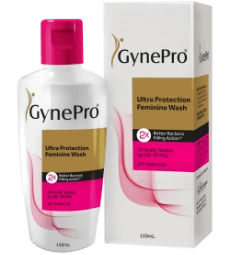
GynePro® 150mL


